
Transform Your Purchasing Process with the Right Procurement Software
In today’s fast-paced business environment, organizations are constantly searching for…

Procurement software ROI is a critical consideration for businesses today. It justifies the investment in technology by demonstrating tangible benefits.
Understanding how to measure this ROI is essential for procurement managers and decision-makers. They need to see real numbers and metrics to make informed choices, using software performance metrics to compare baselines and track trends.
Procurement software can lead to significant cost savings and efficiency gains. These benefits are crucial for maintaining a competitive edge in the market and can drive procurement cost reduction.
Automation in procurement processes can reduce errors and save time. This efficiency translates into measurable improvements in business operations.
Real-world data and examples are vital for proving procurement software ROI. They provide insights into successful strategies and outcomes.
This guide will explore how to effectively measure and prove procurement software ROI, including how companies measure ROI from procurement software in practice.
Proving procurement software ROI is vital for justifying investments. Decision-makers need evidence of value to support spending. Without proven ROI, backing procurement initiatives becomes challenging.
ROI signifies more than cost recovery. It shows gains in process efficiency and strategic value. Companies often realise benefits beyond direct financial savings.
Investors and stakeholders ask for clear ROI. They require data and metrics to gauge success. Delivering these metrics fosters trust and secures future support. Using ROI software solutions such as dashboards and reporting tools helps standardise calculations and communicate results clearly.
Key reasons for validating procurement software ROI include:
Measuring and proving ROI helps guide future decision-making. It ensures continued progress and financial stability. Accurate ROI metrics also guide future software improvements and strategic adjustments.
Metrics are essential for assessing procurement software ROI. These software performance metrics provide concrete data on its effectiveness. Identifying the right metrics helps track performance and justify investments.
Key metrics include cost savings, which reflect direct financial benefits. Process efficiency measures time and labour reductions. Compliance improvements track adherence to standards and regulations.
Spend under management indicates better control over expenditures. Supplier performance gauges the effectiveness of supplier relationships. These metrics align procurement goals with business objectives.
For meaningful results, metrics should be:
A well-rounded approach using these metrics ensures a comprehensive ROI evaluation. These are commonly referenced when discussing how companies measure ROI from procurement software.
Utilising visual tools like dashboards can simplify data interpretation and enhance decision-making.
Cost savings are fundamental in proving procurement software ROI. They capture the direct financial impacts. Savings arise from reduced purchasing costs and avoiding overspending.
Procurement software streamlines processes and reduces manual work. It mitigates unnecessary costs and expenses. Identifying these areas is crucial for accurate ROI measurement.
Key cost reduction areas include:
Monitoring these cost-saving activities can highlight the software’s financial benefits. This approach focuses on cost-conscious operations and budget adherence.
Efficiency and time savings are critical ROI components. They reflect optimised processes.
Automation software accelerates procurement cycles. It reduces delays and errors in manual tasks.
Shorter cycle times boost productivity. Procurement teams can focus on strategic tasks. A clear improvement in time management indicates increased software value.
Essential efficiency metrics include:
Monitoring these factors offers insights into the software’s performance. It supports informed decisions on process improvements.
Compliance and risk mitigation are vital for procurement software ROI. They ensure adherence to internal and external requirements. Failure to comply can lead to significant fines and reputational damage.
Effective procurement software addresses these issues. It improves audit readiness through thorough records and transparency. Key compliance benefits involve:
Monitoring compliance supports risk mitigation efforts. It strengthens the company’s position in regulatory landscapes.
Supplier performance is a crucial ROI metric. It indicates improved relationships and procurement effectiveness. Reliable suppliers contribute to smoother operations. Measuring performance informs procurement strategies.
Managing spend effectively shows procurement’s strategic alignment. It curbs maverick spending and enhances negotiation power. Spend under management is a core focus area.
Key metrics to track:
Analysing these metrics enhances procurement’s value contribution. It drives better supplier partnerships and financial outcomes.
Measuring the ROI of procurement software involves various strategies. Each company may adopt its approach tailored to its needs. The goal is to quantify benefits against the investment.
Firstly, companies establish clear objectives for the software. These objectives guide the selection of relevant metrics. Aligning these goals with key performance indicators (KPIs) helps track progress effectively.
A common method involves collecting baseline data prior to implementation. This data serves as a benchmark to compare post-implementation performance. Companies can then identify changes attributable to the software.
Key measurement methods include:
Adopting these methods ensures continuous ROI evaluation. Visual tools like dashboards provide a snapshot of current performance and trends. In short, this reflects how companies measure ROI from procurement software across functions.
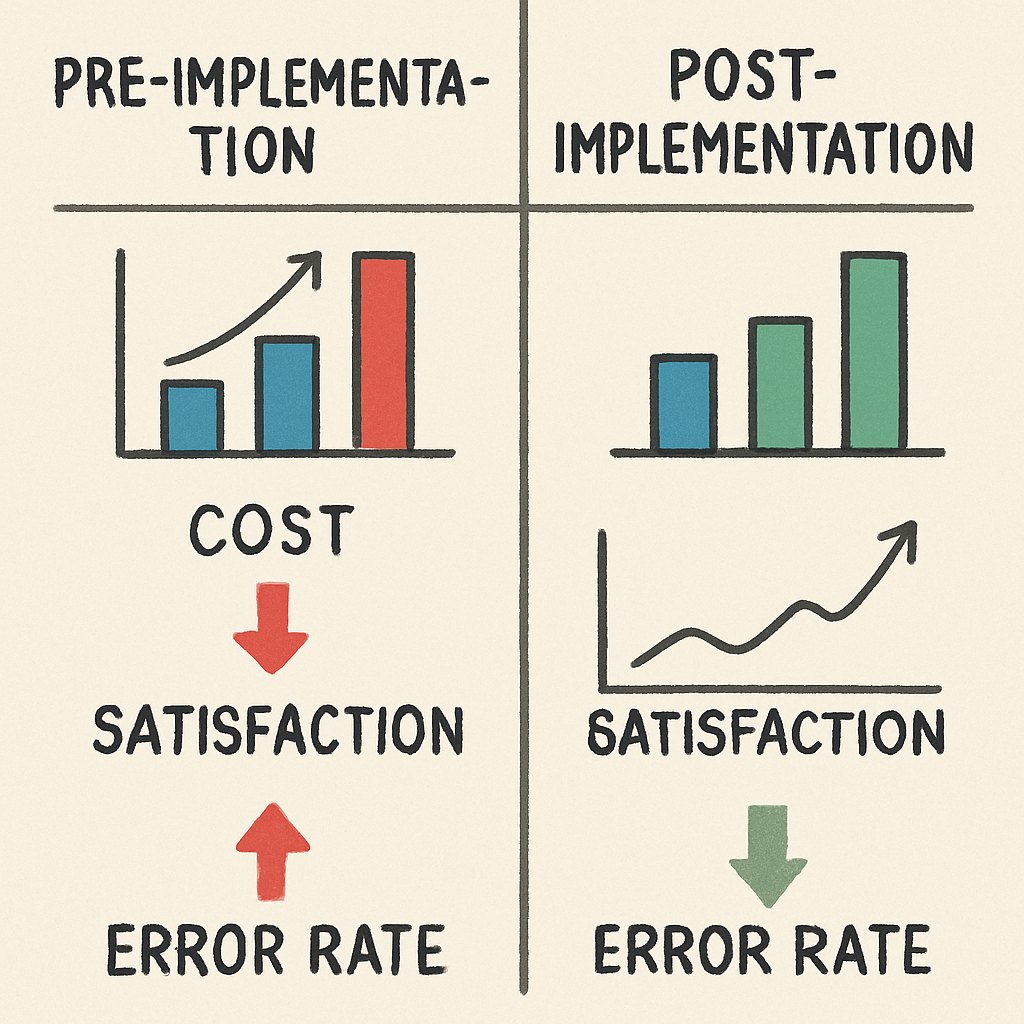
Calculating the ROI of procurement automation software requires a systematic approach. Start by determining the total cost of ownership (TCO). This includes software expenses, implementation costs, and ongoing support.
Next, identify the specific benefits that the software delivers. These benefits often include cost savings, efficiency improvements, and compliance gains. Quantifying these elements is vital for a comprehensive ROI analysis.
Afterwards, compare the identified benefits against the TCO. This comparison reveals the financial return relative to the investment. It’s essential to consider both tangible and intangible benefits in this calculation.
Also, incorporate long-term savings and strategic advantages.
Procurement software may deliver benefits beyond immediate financial gains, such as improved supplier relationships and market positioning.
Here’s a simple calculation process:
Finally, visualise the results to aid decision-making. Many teams use ROI software solutions or analytics suites to standardise the ROI of procurement automation software across business units.
Real-world examples can effectively demonstrate the ROI of procurement software. Case studies reveal how companies use data to justify their investments. These examples highlight specific metrics that showcase successful ROI measurement.
One company integrated procurement software and reduced unauthorised spending significantly. By tracking spend under management, they optimised their supplier selection and negotiation processes.
The data showed a clear cost reduction and efficiency boost.
Another enterprise used automation to streamline its approval workflows, which reduced purchase order cycle times by nearly 50%. Their data-driven approach highlighted the software’s impact on process efficiency and time savings.
Key metrics in these examples include:
These stories demonstrate the potential of procurement software to transform operations. Companies leveraging these solutions gain measurable improvements and competitive advantages, supported by clear software performance metrics.
To maximise the return on investment for procurement software, strategic planning and continuous effort are essential.
One crucial step involves setting clear, measurable goals before implementation.
This provides a baseline for evaluating success.
Engaging all stakeholders enhances user adoption, crucial for software success. Providing comprehensive training ensures users are well-prepared to utilise the software effectively. This leads to higher satisfaction and productivity gains.
Regular performance reviews help maintain and improve ROI over time. It’s vital to adapt strategies based on these reviews for continuous improvement. Companies that embrace this adaptive approach often see sustained benefits.
Key best practices include:
These practices lay the foundation for long-term software success. By focusing on these areas, organisations can consistently reap the rewards of their procurement software investments.
Implementing procurement software presents several challenges. Resistance to change is a common hurdle. Employees may be hesitant to adopt new systems due to comfort with existing processes.
Another challenge is ensuring data accuracy and integration. Without reliable data, the software’s effectiveness is compromised. To overcome this, develop robust data management practices and ensure seamless integration.
Budget constraints can also impede software adoption. To address this, carefully demonstrate potential ROI to justify the initial investment. Educating stakeholders about long-term benefits can ease budgetary concerns.
Key challenges and solutions include:
Tackling these challenges effectively will ease the transition to procurement software and maximise its potential benefits.
Proving the ROI of procurement software requires more than assumptions. Real numbers and clear metrics are essential. They provide concrete evidence of the software’s value.
By highlighting cost savings and efficiency gains, you can effectively justify the investment. Understanding and leveraging the data helps make a compelling business case, ensuring decision-makers see the tangible benefits. This approach paves the way for informed investment in procurement solutions.
Procurement software ROI measures the financial and operational benefits gained from procurement software compared to its total cost, including cost savings, efficiency improvements, and compliance gains.
Companies measure ROI by comparing pre- and post-implementation metrics such as procurement cost reduction, cycle time improvement, spend under management, and supplier performance.
Key metrics include cost savings, purchase order cycle time reduction, process efficiency, compliance improvement, and increased spend visibility.
Procurement automation reduces costs by eliminating manual processes, preventing maverick spending, improving negotiation outcomes, and accelerating procurement cycles.
Most organisations start seeing measurable ROI within 3–6 months, with significant long-term gains realised over 12–24 months depending on adoption and usage.
In today’s fast-paced business environment, organizations are constantly searching for…

Reimagining Industrial Waste as a Resource For decades, most industries…

Mid-market businesses face unique challenges in procurement compliance. Limited resources…
